
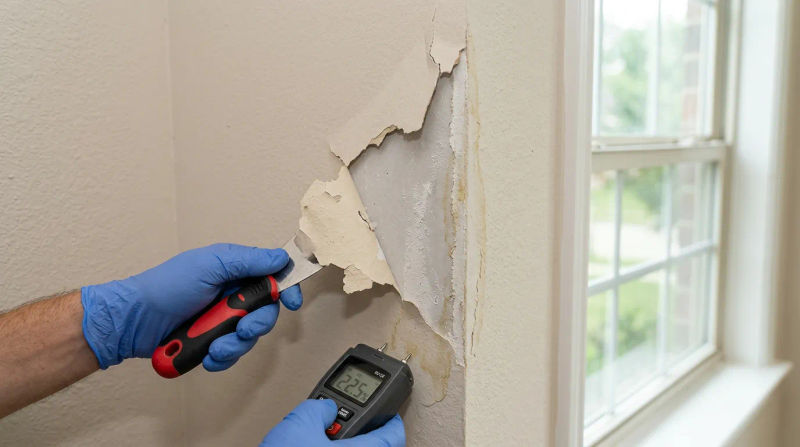
You walk into a room and your eyes are immediately drawn to it: a bubble in the paint on the wall, a small flake on the floor, or a section near the window that’s started to lift and curl. It’s frustrating to see a once-smooth wall begin to fail. Even a high-quality paint job can falter if the underlying conditions aren’t right. Understanding the reasons for interior paint peeling is the first step toward a lasting solution, especially in a climate like ours in Jersey Village, TX.
As cooling temperatures arrive in October, the drier air provides a great opportunity to diagnose these issues. Unlike the muggy summer weeks, this season allows walls to dry properly, giving us a clearer picture of the root cause and providing the ideal conditions for a durable repair and recoat.
Common Signs and Symptoms
Peeling paint isn’t always a dramatic sheet falling off the wall. It often starts with subtle signs that indicate a deeper problem. As trained technicians, we've learned to spot these early warnings, which can help prevent a small issue from becoming a major project. Look for:
- Blistering or Bubbling: These are pockets of paint that have lifted from the underlying surface, often caused by moisture or heat. They can be small and scattered or form large, balloon-like bubbles.
- Cracking or “Alligatoring”: This pattern looks like the scales on a reptile's back. It typically happens when a rigid topcoat of paint is applied over a more flexible one, or when paint ages and loses its elasticity.
- Flaking: Small, brittle pieces of paint break away from the surface. This is common when paint is applied over a dirty, unprepared wall or when the paint itself has become too old and dry.
- Peeling: This is the most obvious sign, where larger sections of paint begin to lift and detach from the wall. You’ll often see this in high-humidity areas like bathrooms, kitchens, and laundry rooms.
Observing where these symptoms appear is just as important as noticing them. Peeling near windows, in corners of a bathroom, or on a ceiling can point to different underlying causes.
What Causes This Problem
So, why paint peels indoors? It almost always comes down to a loss of adhesion between the paint film and the surface beneath it. This failure can be traced back to a few key culprits, many of which are common in Jersey Village homes.
1. Moisture and Humidity This is the number one cause of paint adhesion problems walls face in our area. The high indoor humidity from frequent A/C use, steamy showers, and cooking can introduce moisture that gets trapped behind the paint film. This moisture pushes the paint away from the drywall or plaster, causing blisters and peeling. Leaks from plumbing, roofs, or windows can also introduce water into the wall cavity, leading to extensive paint failure and more serious structural concerns.
2. Inadequate Surface Preparation Proper painting is 90% preparation. If a surface isn’t properly prepared, even the most expensive paint will fail. Key steps in Jersey Village interior painting prep that are often skipped include:
- Cleaning: Walls accumulate dust, oils from cooking, and grime over time. Paint cannot adhere to a dirty surface.
- De-glossing: Applying new paint over a glossy or semi-gloss finish without scuff-sanding it first is a recipe for peeling. The new paint has nothing to grip onto.
- Priming: Primer is essential for ensuring adhesion. It seals porous surfaces, blocks stains, and creates a uniform foundation for the topcoat. Skipping primer, especially on new drywall or over repaired areas, is a common mistake.
3. Incompatible Paint Layers This is a frequent issue we encounter in homes from specific eras. For instance, many of the sprawling single-story homes built in Jersey Village during the 1970s were originally finished with oil-based paints. Applying modern acrylic-latex paint directly over an old, unprepared oil-based surface will almost certainly lead to interior paint peeling. The latex paint cannot form a strong bond with the non-porous, slick oil paint, and it will eventually delaminate.
4. Environmental Conditions During Application Paint needs to be applied and cured within a specific temperature and humidity range. Painting in a room that is too hot, too cold, or too damp can interfere with the curing process, resulting in a weak bond that fails prematurely. This is why our crews carefully manage the environment during a project, ensuring conditions are optimal for a durable finish.
When to Call a Professional
Once you’ve identified peeling paint, the next question is whether to tackle it yourself or bring in an expert. The answer depends on the scale and suspected cause of the problem.
- Consider DIY: If the issue is a very small, isolated spot - perhaps a tiny flake in a low-traffic area where you know the cause (e.g., it was scraped by furniture) - a DIY repair might be feasible. This would involve scraping the loose paint, sanding the edges smooth, cleaning the area, priming, and repainting.
- Call a Professional: We strongly recommend contacting a qualified professional for most situations involving interior paint peeling. Here’s why:
- Diagnosis is Key: The peeling you see is a symptom. An experienced painter can determine the root cause. Is it humidity, a slow leak, or an incompatible paint type from 30 years ago? Our technicians use tools like moisture meters and their extensive experience to accurately diagnose the problem, ensuring the fix is permanent.
- Widespread Failure: If the peeling is occurring in multiple areas, across an entire wall, or in high-moisture rooms like a bathroom, it indicates a systemic problem that a simple touch-up won’t solve.
- Proper Preparation: Professionals have the standardized processes and equipment to handle the extensive prep work required for a lasting repair. This includes containing dust, properly sanding and feathering edges, using the correct primers (like a bonding primer for oil-to-latex transitions), and ensuring the surface is perfectly clean.
- Safety Concerns: If your home was built before 1978, there is a chance the failing paint contains lead. Professionals are trained in lead-safe work practices to prevent hazardous dust from contaminating your home.
Attempting a large-scale fix without addressing the underlying cause often results in the new paint peeling again within a year, leading to wasted time, money, and effort.
Conclusion
Peeling interior paint is more than just a cosmetic issue; it’s a sign that something is wrong with the surface or the environment. The most common culprits are moisture, poor preparation, and applying incompatible paint types - issues that are particularly relevant in the homes and climate of Jersey Village. While a small flake might seem minor, it’s often an early warning of a bigger problem to come.
Acting early can save you from more extensive and costly repairs down the road. By correctly diagnosing the cause and following a rigorous preparation process, you can ensure your next paint job is your last for a very long time.
If you notice any of these signs of paint failure in your home, contact a local painting professional for an inspection. They can provide a clear diagnosis and a plan for a beautiful, long-lasting finish.