
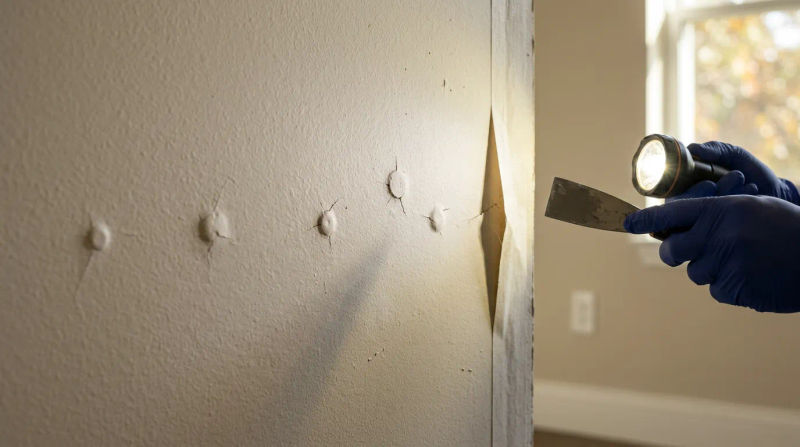
As the Texas heat begins to fade and the cooler, drier air of October settles in, many of us in Prairie View turn our attention indoors. It’s the perfect time to plan for holiday gatherings and maybe even tackle that interior painting project you’ve been considering. You run your hand along the living room wall, imagining a fresh new color, and feel it - a small, distinct bump. Or perhaps you glance up at the ceiling and notice a faint, hairline crack along a seam that wasn’t there last spring.
These seemingly minor imperfections are often the first signs of common drywall issues. While they might look small, they can be frustratingly persistent and can easily telegraph through a new coat of paint, ruining the smooth, flawless finish you’re after. As a specialist with over a decade of experience in surface preparation and coatings, I can tell you that understanding these signs is the first step toward a durable, professional-quality result.
Common Signs and Symptoms
Before you can address a problem, you have to know what you’re looking at. When our technicians perform an interior assessment, they are trained to spot these specific flaws that can compromise a paint job. Here’s what you should look for in your own home:
- Drywall Nail Pops: These are perhaps the most common issue. They appear as small, circular bumps or raised spots on your walls or ceilings. Sometimes, the paint and joint compound over the fastener head will crack, creating a small, target-like circle. This is literally the head of a nail or screw “popping” through the surface finish. They are most noticeable in certain lighting conditions, often casting tiny shadows that disrupt the flat plane of the wall.
- Loose Drywall Tape: Your walls are constructed from large sheets of drywall. The seams between these sheets are covered with paper or fiberglass tape and several layers of joint compound to create a smooth, continuous surface. When you see a bubble, blister, or a piece of tape that appears to be peeling or lifting away from the wall, you're seeing loose drywall tape Prairie View TX homes often exhibit. This is especially common along horizontal ceiling seams or in corners where walls meet.
- Drywall Seam Separation: This is a more advanced version of loose tape and one of the clearest drywall seam separation signs. Instead of a bubble, you’ll see a distinct, fine crack running perfectly straight along a seam. It indicates that the joint between two drywall sheets is failing and pulling apart. These cracks can be very subtle at first but will almost certainly grow wider and more noticeable over time.
What Causes This Problem
These surface-level issues are rarely caused by a problem with the drywall itself. Instead, they are symptoms of movement happening within the home’s structure. Understanding the root cause is crucial for a lasting repair.
One of the primary factors, especially here in the Prairie View area, is our soil. Many homes are built on Texas clay soils, which are known for their expansive properties. This soil swells significantly when it absorbs moisture during wet seasons and shrinks dramatically during dry periods. This constant expansion and contraction can cause subtle but powerful shifts in your home's foundation. As the foundation moves, the entire house frame flexes, putting stress on the rigid, unmoving drywall panels. This stress is often relieved at the weakest points: the fastener heads and the seams, leading directly to drywall nail pops and separation.
Another major contributor is the natural behavior of the wood framing inside your walls. Lumber expands and contracts with changes in humidity and temperature. As the weather cools, the wood studs in your walls can shrink slightly. A screw or nail that was driven tightly into a stud during a more humid season can become exposed as the wood around it recedes, pushing the joint compound outward and creating a pop. Many homes in the Prairie View area, built during the boom of the 1990s and 2000s, used kiln-dried lumber, but even this wood continues to settle and adjust to our local climate for years after construction. These larger, two-story homes also have more complex framing, providing more opportunities for this seasonal movement to occur.
Finally, the initial installation can play a role. If the drywall wasn't properly secured with enough fasteners, or if the joint compound was applied too thinly or in unfavorable humidity, problems can show up sooner. This isn't a criticism of the original builders, but a recognition that even with good practices, the immense forces of a settling house can sometimes overwhelm the materials.
When to Call a Professional
So, you’ve identified a few nail pops or a bubbly seam. Is this a weekend DIY project or a job for an experienced crew? The answer depends on the scope and your desired outcome.
For a handy homeowner, repairing one or two isolated nail pops can be a manageable task. It typically involves driving the fastener deeper, applying a few thin coats of spackle or joint compound, sanding smooth, priming, and painting. The challenge is in the finishing - it takes a skilled hand to create a patch that is truly invisible under a coat of paint.
However, we strongly recommend calling a professional in several scenarios:
- Widespread or Recurring Issues: If you have dozens of pops across multiple rooms, or if you’ve repaired a seam only to have it crack again, it points to a more significant, ongoing movement. A professional can assess the situation and use more robust repair methods, such as using screws to reinforce a seam before re-taping, that a typical DIY approach might miss.
- You're Planning to Paint: This is the most critical time to call for help. The single most important step to a beautiful, long-lasting paint job is surface preparation. Our crews are trained to understand that you cannot paint over these flaws; you must fix them correctly first. Attempting to just prep drywall before painting by spackling over a cracked seam without properly re-taping and securing it will only result in the crack reappearing within months. Professionals have the standardized processes, tools, and expertise to ensure every inch of the wall is sound and smooth before a single drop of paint is applied.
- Difficult Areas: Working on ceilings, high walls in stairwells, or inside corners requires specific techniques and equipment. Professional teams are equipped with the scaffolding, tools, and dust-containment systems to handle these areas safely and efficiently, delivering a level of finish that is difficult to achieve from the top of a stepladder.
Conclusion
Seeing drywall nail pops and loose tape on your walls can be disheartening, but it’s a common occurrence in homes both new and old. These issues are often the natural result of your home settling and reacting to its environment, particularly the shifting clay soils here in Prairie View.
While they may seem like minor cosmetic blemishes, they are warning signs that shouldn't be ignored, especially if you're investing in a new paint job. Addressing these problems correctly is the foundation of any quality interior project. Acting early can prevent them from worsening and ensures that your walls provide a perfect, durable canvas for the future. Don't let these small imperfections stand between you and a beautiful home interior.
If you notice any of these signs, contact a local Painting professional for an inspection.