
As the intense Texas heat finally gives way to the cooler, drier air of October, you might find yourself opening the windows and taking a fresh look at your home’s interior. After months of running the air conditioning, this seasonal shift is the perfect time for a quick visual check-in. It’s often during this transition that you might notice a fine crack spidering out from a window frame or a slight bubble forming along a ceiling seam that you swear wasn’t there before. These subtle changes are your home’s way of communicating, and it’s important to know how to interpret the message.
In communities like Panorama Village, where many homes have the classic charm of 1960s construction, these signs can be particularly common. Decades of seasonal expansion and contraction, combined with the natural settling of a structure, can put stress on interior walls. Understanding what to look for is the first step in maintaining the integrity and appearance of your home.
Common Signs and Symptoms
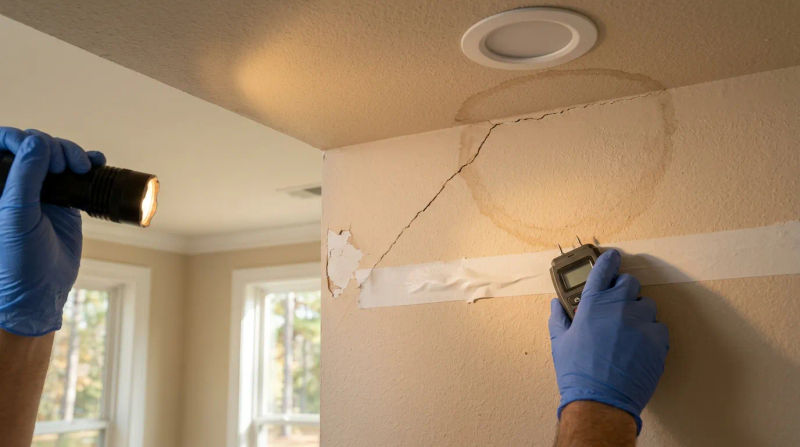
Performing a thorough Panorama Village drywall inspection yourself is straightforward. Simply walk through each room and look closely at the walls and ceilings, paying special attention to seams, corners, and areas around windows and doors. Our trained technicians know that even the smallest imperfection can point to a larger issue. Here are some of the most common drywall damage signs to watch for:
- Hairline and Stress Cracks: Small, thin cracks are often cosmetic, resulting from minor settling or shifts in temperature and humidity. You’ll frequently see them extending from the corners of doors and windows, which are natural points of stress. However, wider cracks (more than 1/8 inch) or those that appear jagged and run diagonally across a wall could indicate more significant structural movement.
- Bubbling or Lifting Drywall Tape: Have you noticed a long, narrow bubble or a raised edge along a seam where two sheets of drywall meet? This is a classic sign of tape failure. It looks like a blister under the paint and indicates that the paper or mesh tape used to cover the joint has lost its adhesion.
- Soft or Spongy Spots: Press gently on your walls and ceilings, especially in areas below bathrooms, near windows, or under the roofline. Any spot that feels soft, spongy, or damp to the touch is a major red flag. This is particularly true for soft drywall spots near ceiling areas, which almost always point to an active or recent moisture problem.
- Water Stains or Discoloration: Yellow or brownish stains on a wall or ceiling are telltale signs of water intrusion. Even if the area is currently dry, the stain indicates that a leak has occurred at some point. These stains can be subtle at first, looking like a faint shadow, but they tend to grow and darken over time.
- Nail or Screw “Pops”: These appear as small, circular bumps or cracks on the surface of the drywall. They happen when the wood framing behind the drywall expands and contracts, pushing the fastener slightly outward. While usually not a sign of a serious problem, a large number of them can be unsightly and may indicate significant humidity fluctuations.
What Causes This Problem
Understanding the root cause of drywall damage is key to implementing a lasting repair. Simply spackling over a crack without addressing the underlying issue is a temporary fix at best. Here are some of the primary culprits we encounter:
- Humidity and Temperature Cycles: The dramatic shift from Panorama Village’s long, hot, humid summers to drier autumn air causes building materials to expand and contract. Wood framing swells in high humidity and shrinks as it dries out. This constant movement puts stress on rigid drywall panels, leading to cracks and nail pops. This is one of the most common bubbling drywall tape causes; moisture in the air can weaken the joint compound’s bond, and as the structure shifts, the tape pulls away.
- Natural Settling in Older Homes: Homes built in the 1960s, like the many beautiful Ranch and Split-level designs in Panorama Village, have had over half a century to settle. This slow, natural process is perfectly normal, but it inevitably creates stress that can manifest as cracks in the drywall. Most settling-related cracks are minor, but they should be monitored.
- Water Intrusion: This is the most destructive cause of drywall damage. The source can be internal (a plumbing leak in a wall or ceiling) or external (a failing roof, clogged gutters, or improperly sealed windows). Once drywall gets wet, its structural integrity is compromised. The gypsum core becomes soft and crumbly, and it can become a breeding ground for mold and mildew if not addressed promptly and properly.
- Faulty Installation: Sometimes, problems that surface today are rooted in the original construction. If the drywall installers used too little joint compound, didn't embed the tape properly, or failed to use sufficient fasteners, those shortcuts can lead to failures like peeling tape and excessive cracking decades down the line.
When to Call a Professional
Some minor drywall issues can be handled by a confident DIYer, while others require the expertise and tools of an experienced professional. Knowing the difference can save you time, money, and frustration.
Consider a DIY repair for:
- A few isolated nail pops.
- A single, small hairline crack that has not changed in size over time.
- A small dent or scuff in the middle of a wall.
It’s time to call a professional when you see:
- Any signs of water damage. Before any drywall repair can begin, the source of the moisture must be located and fixed. A professional can assess the extent of the damage, determine if mold is present, and replace the affected sections properly.
- Large, recurring, or diagonal cracks. These can be indicators of ongoing settling or structural issues that need a professional evaluation.
- Extensive bubbling or peeling tape. Repairing an entire seam is a multi-step process that involves removing the old tape, re-applying compound and tape, and feathering it out to blend seamlessly with the surrounding wall. This requires a high level of skill to avoid a visible hump or uneven finish.
- Repairs on textured ceilings. Matching an existing ceiling texture (like popcorn or knockdown) is notoriously difficult without specialized equipment and experience. A poor patch job on a ceiling is often more noticeable than the original damage.
An organized team will not only repair the damage but will also work to diagnose the root cause, ensuring the solution is durable and long-lasting.
Conclusion
Your home's walls and ceilings are more than just decorative surfaces; they are indicators of the building's overall health. This October, take advantage of the changing season to give them a close look. Identifying issues like cracks, stains, or soft drywall spots near ceiling areas early on can prevent minor annoyances from escalating into major, costly repairs. Paying attention to these details helps protect your investment and maintain the beauty of your home for years to come.
If you notice any of these signs, contact a local professional for an inspection. An expert eye can help you understand the severity of the problem and recommend the most effective course of action.